Breaking Barriers in Hydrogen Isotope Separation
A team of researchers from Tohoku University, Max Planck Institute, and international collaborators has unveiled a new material that could transform how we separate hydrogen isotopes — a process crucial for energy technologies, nuclear fusion, and scientific research.
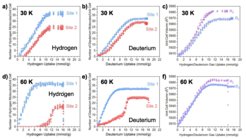
In a paper published in Nature Communications, the team reports on a triazolate-based metal-organic framework (MOF) that shows exceptionally high selectivity for deuterium (D₂) over hydrogen (H₂). Using advanced experiments like neutron powder diffraction and thermal desorption spectroscopy, they discovered how the material’s nano-sized pores and flexible structure respond differently to the two isotopes, allowing it to trap deuterium far more effectively.
At just 60 Kelvin (–213°C), the material achieved a D₂/H₂ selectivity of 32.5, one of the highest reported among porous materials. When exposed to a gas mixture resembling natural hydrogen (only 5% D₂), it enriched the deuterium content to 75% in a single cycle.
The secret lies in the MOF’s structural dynamics: while both H₂ and D₂ molecules occupy the same adsorption sites, the framework expands slightly less with D₂, pointing to stronger interactions. This behavior exploits subtle quantum effects, like differences in mass and zero-point energy, to separate the isotopes efficiently.

What makes this breakthrough even more promising is the practicality: the triazolate ligand used is commercially available, and the MOF’s design can be scaled up using different metals, paving the way for industrial applications.
One of the corresponding authors, Michael Hirscher (MPI-IS) explains, “We’re now closer to designing materials that can perform isotope separation much more efficiently and sustainably than traditional
energy-intensive methods.”
The study involved collaborations across Japan, Germany, Australia, and the U.S., drawing on cutting-edge neutron scattering facilities and computational modeling.
This achievement marks a key advance in materials science — showing how tailored porous materials can harness molecular-level differences to solve longstanding industrial challenges.


